

Eid al-Fitr 2025 marks the first Eid under Indonesia’s new president, President Prabowo Subianto. At the outset of his presidency, discourse around priority policies–including plans to raise Value-Added Tax (VAT) from 11 per cent to 12 per cent, inception and funding of Danantara, and state budget efficiency amidst the free nutritious meal (makanan bergizi gratis/MBG) program and other economic projects have drawn mixed public reactions. While some expressed support, majority voiced dissatisfaction and criticism.
This study analyzes how the government’s public communication, particularly in response to economic and political issues, impacts the Indonesian public’s purchasing power. The research focuses on trends in mainstream media and social media coverage, examining the interplay between policy narratives, public perception, and their effects on public spending behavior.
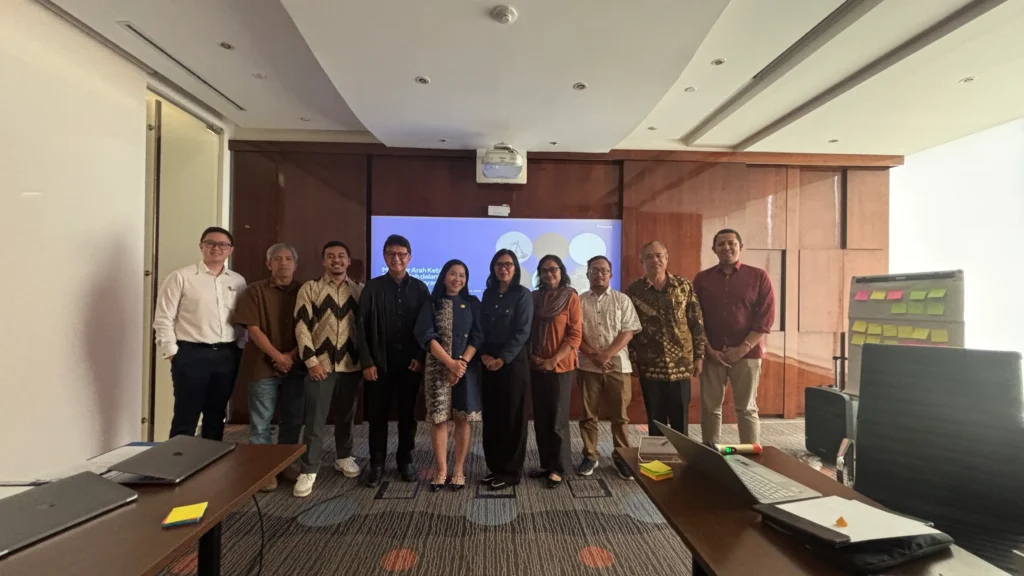
To assess purchasing power trends, the study compares media coverage (mainstream and social media) during the Eid al-Fitr period of 2023, 2024, and 2025. Additionally, a Focus Group Discussion (FGD) was conducted with economists, media experts, and association representatives to gather deeper exploratory insights on the issues.
The findings reveal significant differences in both mainstream media reporting and social media discourse across the three Eid al-Fitr periods. The 2025 Eid al-Fitr coverage, particularly within the 90 days preceding the holiday, was marked with a significant greater emphasis on political discussions compared to previous years. Furthermore, FGD participants identified shortcomings in the current administration’s policy communication, noting that inconsistent messaging and lack of transparency may have contributed to public uncertainty. This communication approach appears to have influenced the public’s perception on economic stability, which ultimately affects purchasing power.
Based on these findings, the study proposes three (3) primary recommendations: first, the adoption of risk-based communication strategies; second, more efficient presentation of government plans; and third, systematic mapping of key stakeholders as primary target audiences for policy communications.